

I see it too often, families running around like crazy trying to find the “right” facility for their loved one, anxiously calling around, not even sure what a “right facility” entails. They don’t understand the process, the determining factors, or even the reason for admission to a skilled nursing facility.
In this industry it is a well-known fact that case managers at hospitals can be overloaded with cases that require extra attention in so many directions that patient and family understanding, knowledge and choice can fall through the cracks.
In the SNF industry for over 15 years, I have been able to direct, explain and assist families in their understanding of the process even if they don’t choose my facility. Countless times I have received calls from frantic family members who were told they need to choose from this list of accepting facilities and the discharge is happening within a day or two. This can be daunting to receive list of sometimes 15+facilities that have accepted your loved one for care, by a case manager who isn’t able to spend time going over each facility one by one and answering questions. While the case manager can refer to a few of the facilities that maybe they work with a lot and they know have good reputation, does that mean that facility would be the best for the patient?
This is where we need a bridge. The bridge used to be marketers and business development representatives that would come and meet with families and go over questions, but with today's healthcare industry growing like it is, time is of the essence. So we need to build a new bridge. One that caters to not only case managers to take a few tasks off their plates, but also caters to the patients and families themselves, so they have the understanding and CHOICE that we all want for our own care.
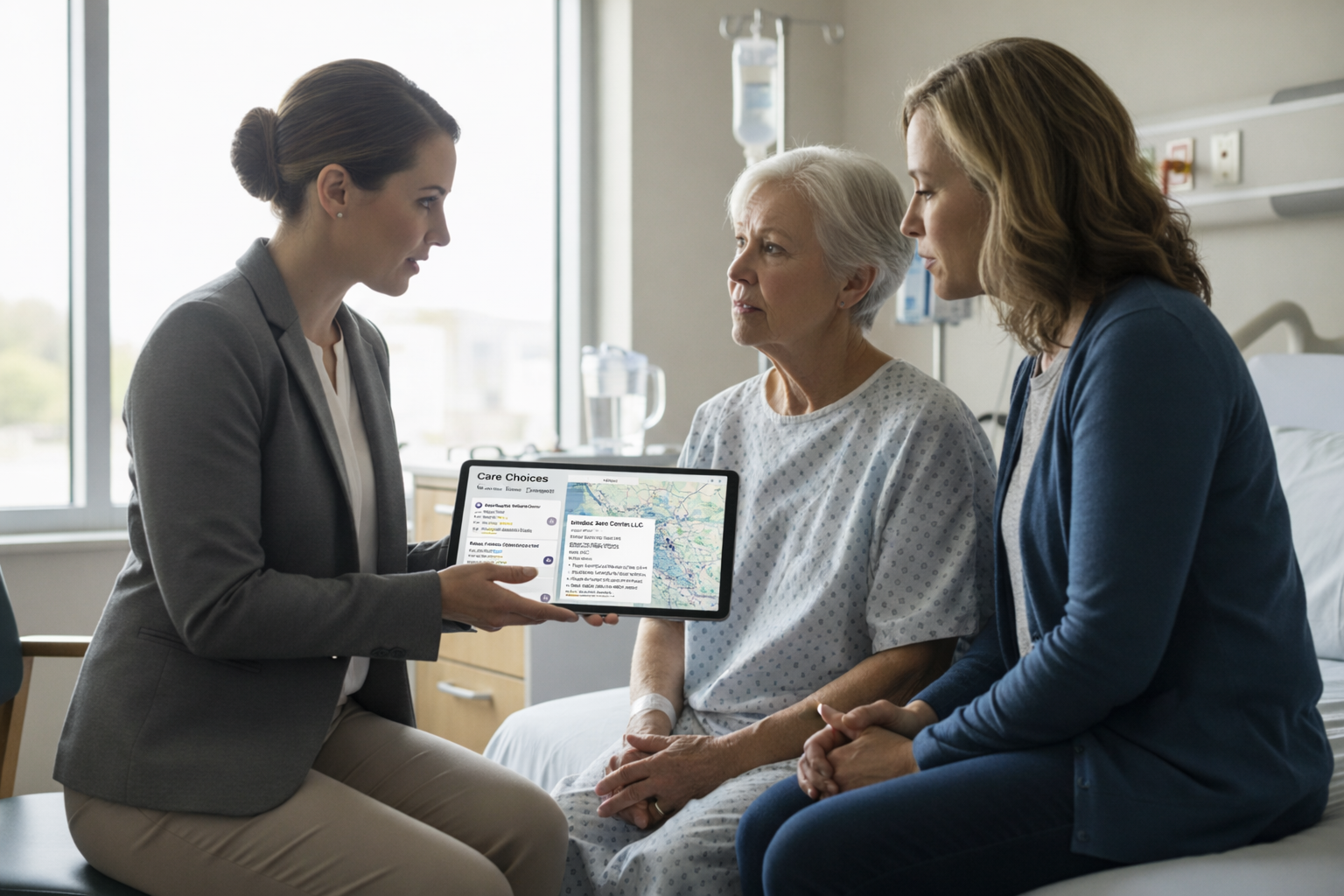
This is where Talamel Health Technologies and its platform, Dina, comes in. Used at the bedside during discharge conversations, Dina brings accepting facilities directly to the customers’ fingertips. Care details, star ratings, amenities, and specialty services are all in one place, allowing families to participate in real time while helping case managers streamline the discharge process and improve hospital flow.
Families can have a direct say in their care while also improving discharge time for case managers. Stepping up a notch, this also helps reduce hospital readmissions by distributing patients to the “right facility” I spoke about in the beginning.
A patient needing advanced wound care doesn’t necessarily need the facility with the best activities or physical therapy - they need the facility with the strongest wound care outcomes and a wound doctor who follows there. A patient who needs more activities due to cognitive impairment doesn’t necessarily need the facility with the highest wound care rates.
While most skilled nursing facilities offer similar core services such as physical, occupational, and speech therapy, Dina allows SNFs to highlight where they truly specialize — whether that’s wound care, behavioral health, IV therapies, extended therapy intensity, TPN, or enteral feeding support.
Case Managers need this bridge to ease their task list.
Skilled Nursing Facilities need this bridge to admit appropriate patients according to their services.
Most importantly to me as a patient advocate, the patients and their families need this bridge, to help them make an educated choice about their healthcare.
About the Author
Alex Beville is Director of Business Development at Orinda Care Center, with over 15 years of experience in senior healthcare and post-acute services. She works closely with hospital case managers, patients, and families to support thoughtful discharge planning and ensure seniors receive care that aligns with their clinical needs and personal goals.
Connect with Alex on LinkedIn → https://www.linkedin.com/in/alex-beville/